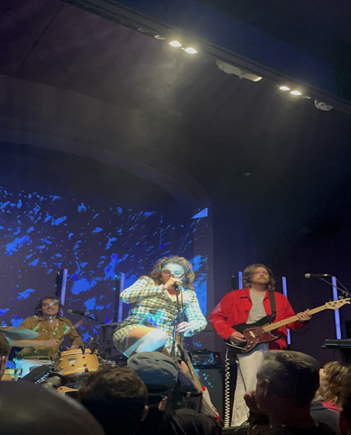

One move, step back, one forward, hips from side to side, hands above.
When you listen to the hit of the 2000s Starlight, it becomes absolutely clear that the emotions of contentment may overwhelm anybody listening to this record; even if it is for the 100th time.
There is one reliable measure of whether a record resonates: its impressions — the response it draws from those equipped to evaluate it. In this case, “audience” refers not to the listener but to the professionals and industry insiders whose judgement shapes careers.
By that standard, Guillaume Atlan from the Supermen Lovers, has earned a level of admiration that remains striking even within the music world. His path to this point has been far from straightforward, marked by an uneasy creative odyssey that ultimately led him to the pages of this magazine. The story behind The Supermen Lovers is one that continues to captivate, offering a narrative as compelling as the music itself.
Chapter I. Becoming Himself
Guillaume, who was raised in Paris, the city of love and reveries, began his musical education in piano and solfeggio at the conservatory at the age of six. Eight years later, he possessed both the knowledge and the inclination for memorisation. He later shifted from classic music to Acid Jazz, becoming the keyboard player in a funk group.
A diverting coincidence occurred when his uncle gifted him, for his 13th birthday, a CD of the new Pink Floyd album. The star recalls that at this time it was “Momentary Lapse of Reason”. As luck would have it, he attended one of their concerts in France at the Château de Versailles. Hypnotised by the show that he became a huge fan of Pink Floyd. He said that: “This concert gave me another point of view on music. I knew I’d be doing this all my life.”
When Guillaume was at university in his early 20s, his friend invited him to a concert where his friend’s friends were playing at the school party. This occurred precisely when electronic sounds and instruments were starting to gain popularity. “What they are doing is incredible. Only two of them are on stage, performing with nothing but electronic instruments,” Atlan’s friend said. “You know it the second you feel the sound” — a remark that stayed with Atlan throughout his life. After the pair later caught the band live, they both reacted with the same excitement, sensing a new sound that had yet to be discovered by the wider public.
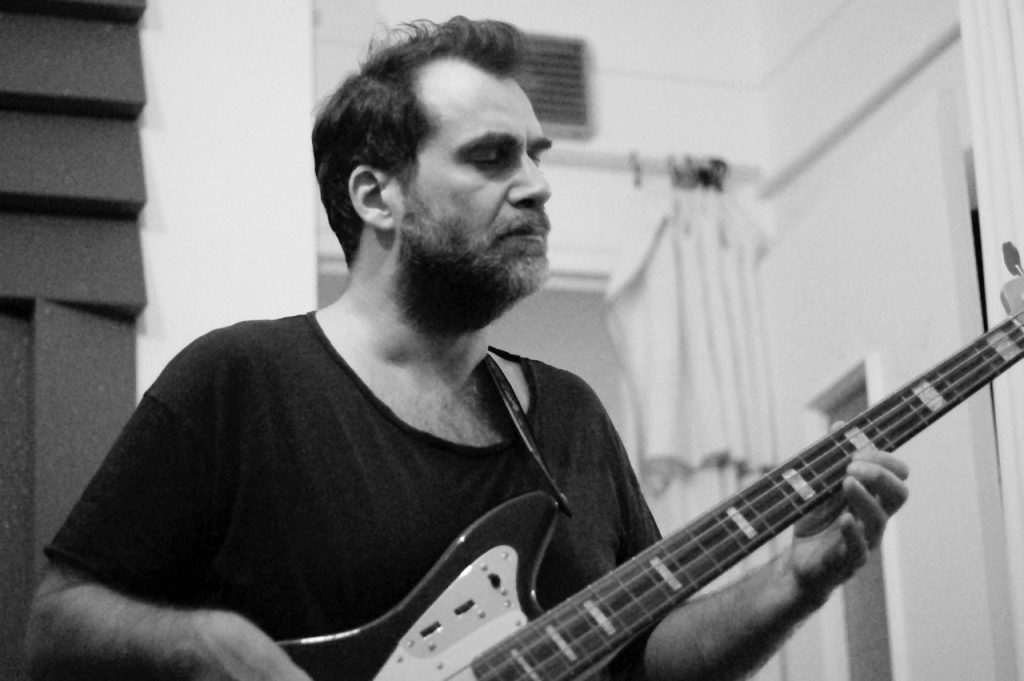
“In 1997, having that kind of gear on stage was an incredible luxury. People looked at them like… ‘WTF?’ And those guys playing at my university turned out to be Daft Punk,” recalls Guillaume. He was so inspired by the show that the idea of purchasing one of those machines was sown in the Starlight composer. “These guys were the first band in France to make music in their room and didn’t need any big studios or big labels.”
He briefly mentioned how their performance showed him that one doesn’t need to be directly involved in the music industry, have ample funds for studio time, or be able to release the music they desire.
His mother was the first person he informed about his decision to leave university.
“I even remember her face that day!” he recalls. “I told her that I’d decided to stop my studies to make electronic music.” She responded by calling it “a marvellous idea,” but quickly added that he would be doing it in her apartment — just as he had done with everything else — before ending the conversation with a firm goodbye.
He left home and stayed for six months at a friend’s house before securing his own place. “I decided to borrow money from a mate and buy myself a sampler and a drum machine. I opened my own label and started to produce electronic music on vinyl under the name Stan De Mareuil.”
Chapter II. A Change
In 1998, two years prior to the decade’s conclusion, a collaboration with Stefan Lebenson was formed. Lebenson was the friend to invite him to the Daft Punk concert.
In this creative partnership, they managed to create six demo tracks and shared their music with some friends.
“One day we were at a vinyl shop in Paris, and one of the guys working there asked us if we produced music.” After introducing themselves, compliments followed. “He really liked it and told us that he was also working for an English music label called Cyclo.”
The label had achieved legendary status in house music due to its association with Chicago’s pioneering artists, who all released their records through it. Philippe Marshall, CEO of Cyclo, signed the two up-and-coming stars to help them release their first track. After that, a new solo project called The Supermen Lovers was formed.
Chapter III. Before the Storm of Fame
The song Starlight was assembled and later recorded in a small, one-room apartment.
“One day I was working on a little loop I found, and I began to build the drum with bass… and suddenly… all the melodies arrived in a snap, just as if God touched my shoulder with his hand. Those melodies appeared in a second, and I will always remember that moment for the rest of my life. A huge sensation of happiness submerged me. It was big. I cried because of happiness. But since that day, I want to feel those few seconds again… I need it, and since that day, I’ve been chasing it.”
It is his natural ability to develop a new concept from scratch. The way Guillaume merges French musical elements with a British aesthetic demonstrates his undeniable gift for pushing creative limits. Mani Hoffman, who was singing purely for pleasure at the time, rightly chose to lend his voice to The Supermen Lovers’ Starlight track. “He had a voice just like Stevie Wonder,” the producer admitted. After co-writing the lyrics, they both proceeded with the recording process without hesitation.
Chapter IV. A Star is Born
Within hours, the 2,000 independently released vinyl copies from his own label during the 2000s were gone from French vinyl shops. Despite the distributors’ requests for more copies, Guillaume, who was young and gaining popularity, did not give in to fame or money. He refused offers to wait for the song to become almost exclusive, allowing people to appreciate his work even more. Considering digital downloads weren’t the go-to for music discovery then, for Guillaume this was a shrewd move.
Those who devise a strategy often achieve victory.
“People began to go crazy, and all of Paris was looking for the record. For the first four months, I did nothing. I let the track become a huge mystery. Then some guys from the United Kingdom started calling me, asking, ‘Is this you who wrote that song?’”
He finally agreed that it was the right time to be signed for an official release. “I went to see all the record companies in Paris, and only one made a decision to release it. It was Sony-BMG.”
It is always interesting to know how those who succeed feel when they are being chased by luck.
“It is a strange thing because, with a hit, the song doesn’t belong to you anymore. I remember when I came to do a week of promo in London, Starlight was absolutely everywhere. In the cab: Starlight. In the shop: Starlight. At the hotel: Starlight… completely crazy.”
The promotion of his tracked included participation at the Top of the Pops and interviews for the BBC. The only feeling that could describe that sensation is strange, according to the sound-producer.
It is a well-known fact that many musical duos usually end up parting ways, but Mani and Guillaume proved to be an exception.
“Before Starlight, he was my friend, and that hasn’t changed,” he replied when asked about their friendship. The artist explains that they are quite dissimilar and have different musical tastes. Because of this disparity, it was challenging to envision a future collaboration.
The era of the Internet knocked on the door and entered without an invitation. You might also say that the ‘music budget’ left the chat room. “I contemplated the end of the golden age of the music industry,” Guillaume admitted.
The artist notes that labels were once “so rich, at a level you cannot imagine,” spending freely and often frivolously. Today, he says, the situation has reversed: they “won’t even offer you a cup of coffee” — not out of unwillingness, but because they simply can’t.
He confessed that for small labels and independents, like himself, having control now is a huge compared to the 90s and early 2000s.
“I lived through the very end of the golden age in the music industry.”
The system has collapsed, dragging major companies down with it.
“We can promote ourselves and release exactly what we want. I agree that money won’t arrive so easily in your pocket, but I have always believed that all kinds of markets must regulate themselves.”
He notes that the major streaming music platforms have made music less valuable than before 2002, and have taken away musicians’ chances of earning enough money to live from what they create.
Chapter V. In a Harbour of Prosperity
Touring around the world, creating and collaborating on different projects is the lifestyle that thrives on. For a popular artists, the limelight often signifies a world of absolute luxury and VIP status. Yet, there are more valuable aspects that far outweigh this.
For example, to inspire himself, Guillaume enjoys walking in Paris, proudly mentioning places such as, La Butte Aux Cailles, which is a little Parisian paradise that most tourists never hear about. He said that: “It’s a good thing. It looks like Montmartre but without the crowd. The restaurants are great, and the vibe is real.”
Since social media changed the way we wake up every morning, it has not affected Atlan’s everyday life at all.
“Honestly, I don’t care. I do it because I have to. Keep in mind that I am making music, and being big on Instagram doesn’t bring anything. I prefer to be big on Spotify, YouTube, Deezer, Pandora, etc. Personally, to me, Instagram is for photos. I am not a photographer or a model. I prefer people to listen to my music rather than watch me taking a shower or eating burgers.”
His advice to emerging artists is to resist arrogance after finishing an album or releasing new music.
“It’s a long way, and you evolve all the time. I think that ‘doubt’ is the main ingredient. If you don’t doubt your music, you make or create rubbish. You don’t evolve or progress. Doubt makes your work better every day. It pushes you to listen to other artists, and it subconsciously forces you to ask yourself why these artists are succeeding more than you. It’s a real mental process.”
His perspective on this century was marked by major technological shifts.
“I know only the last 20 years of the past century. I grew up without the Internet, without all the social media or dating apps. Back in my day, when you wanted to meet someone, you had to move your arse. Now it’s much easier, that’s for sure.”
As for the societal and music industry changes, Guillaume wishes for more love, diversity, parties, and all those things that bring happiness to people. Less hypocrisy. Fewer sad faces.
This article was written by a University of Brighton journalism student who previously managed an independent music publication and interviewed UK and international artists. The interview was first published in 2020 and since has been revised for style.