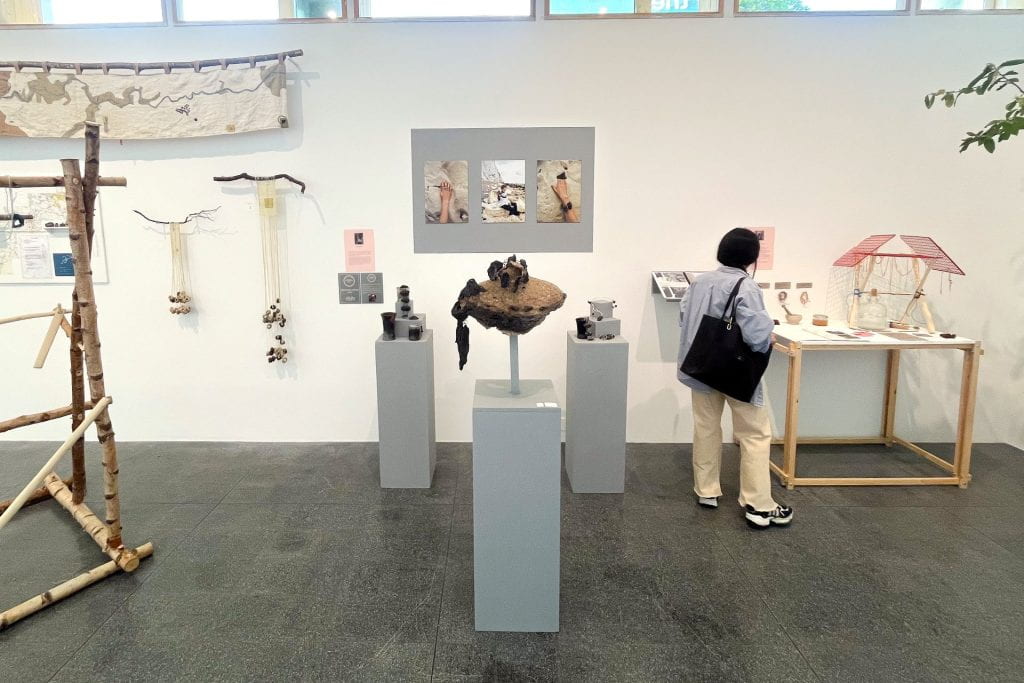

If this year’s American Met Gala drew widespread criticism across social media, a British graduate show in Brighton offered a striking counterpoint. Instead of controversy, it presented a candid exhibition of some of the most dedicated creatives, and visitors praised the work with comments such as “very well made” and “incredible, amazing.”
The interpolation of bespoke pieces, ranging from jewellery fashioned from natural elements to textiles spun from upcycled materials, shows that the University of Brighton continues to produce generations of talent prepared to transform the mass‑consumption paradigm into an environmentally conscious approach.
Grace Sheldon, a Textiles Design with Business Studies graduate, adapted her passion for grassroots venues into her knitted garments by combining visuals from Brighton’s live music scene. Inspired by the universal idea that protest and activism intertwine with fashion, she exhibited patterns intended to deliver a distinctive message. What that message might be is left to individual interpretation, although Grace noted that music lyrics form part of her creative process.
Using yarn donated by factories and second‑hand wool for her graduation project, she has come to see that the music scene provides a strong platform for fashion graduates to market their work.
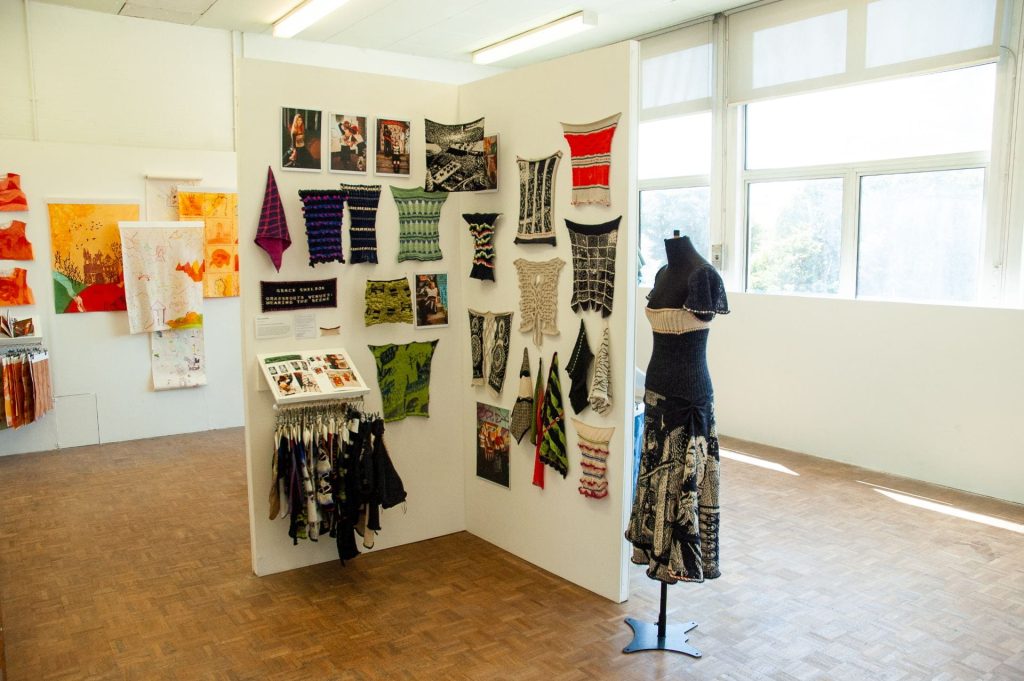
After collaborating with the London‑based British music band Mary and the Junkyard, she not only began developing her personal brand but also merged ambition with tangible results. When asked for advice for those wishing to follow in her footsteps, she said: “Find a connection between the artist and fashion in your work,” and she agreed that messaging an artist’s publicist or PR representative can open new possibilities.
Brighton not only allowed her to connect more deeply with other creatives, but her course also provided the opportunity to express her authentic volition. Rejecting the use of any form of artificial intelligence in her work, the textile designer furthered her luddite inclinations by manually operating knitting machines from the 1980s to complete her creations. Grace believes that AI removes accountability, and she contends that naming those who use AI malevolently is essential to safeguarding the creative industry’s integrity.
Coinciding with the themes of environmentalism and art as protest, another graduate in Graphic Design has embraced monochrome colours. Vee Vaicekauskas, originally from Lithuania, explained that her mortar‑based creation reflects brutalism. From her research, this underlying theme emerged after World War Two, and she views art as an experiment in itself.
In exploring different techniques and approaches to graphic design, Vee discovered that artificial intelligence will never be as creative as the human mind. Most of her work is conceived through critical assessment, emotional insight, and informed choices. These are processes that artificial systems are not yet capable of replicating with accuracy.
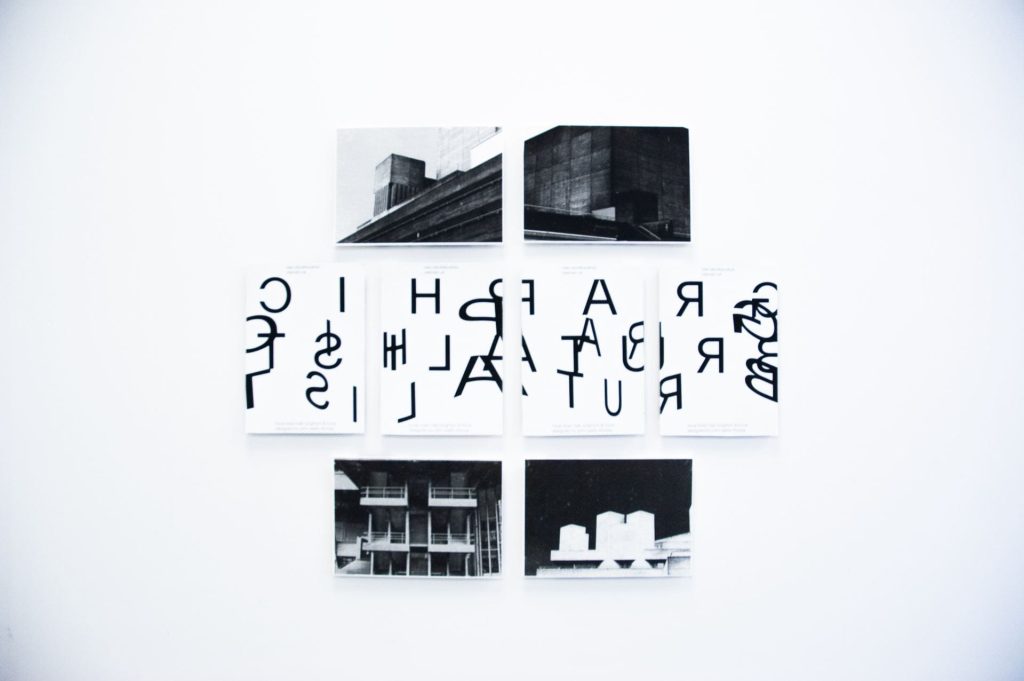
However, while Vee acknowledged that the cooling phase of entry‑level roles is a visible challenge after graduation, she insisted that networking and distributing physical copies of work to potential employers at events significantly increases the chances of securing sought‑after opportunities.
True to the matter is the fact that menial jobs may diminish the ambition to pursue a desired creative role, and Vee’s advice for anyone experiencing such burnout is to make friends on the course to help maintain balance. In her words, communities allow for the expansion of connections necessary not only for future career prospects but also for critique that can improve the skills of a graphic designer or any creative, so to speak. “In design you have to know people,” she said.
Vee’s lecturers, instead of offering deceptive reassurances, focused on teaching modules that addressed graduate representation in today’s employment landscape. Every academic she encountered during her studies was amicable and supportive throughout.
Admitting that she “hated every project made in first and second year”, she urged everyone to learn self‑acceptance. She added that power is gained through learning from mistakes, and progress is achieved through consistency, although critique from lecturers was invaluable to her development.
Frequently, videos on social media featuring completed work omit the failures. Anyone considering an art degree has faced some form of self‑criticism or denial, and prospective students are no different. From the majority of those exhibiting at the show, one message was clear. If you wait, opportunities do not come your way. And for both Grace and Vee, self‑criticism is only useful to a certain extent.
The misleading assertion that creative degrees are ultimately pointless is debatable when you consider the networking and financial support the University of Brighton can provide. For ongoing students and graduates wishing to explore the entrepreneurial side of their studies, beepurple is an exclusive entrepreneurship service run by professionals who specialise in securing funding and grants beneficial to future success. Honey Bollini Marshall, who studied the same course as Grace Sheldon, managed to secure funding for one of her projects, and all it took was ambition.
Graduating from university is as daunting as arriving there for the first time. In the first weeks you may experience melancholy at parting with your household. In the last weeks of your graduation, celebrations take place to honour your achievements. The completion of this journey does not mark an end, but a rebirth of a qualified expert who can maintain authenticity over the far‑fetchedness of an artificial mind. And all the while, we are told that degrees are not worth the effort, yet their value lies in expanding your networks and opening doors that would otherwise remain closed.