
Last Sunday marked the final U.S. stop on the 30th‑anniversary tour celebrating Jay‑Z’s landmark albums The Blueprint and Reasonable Doubt. But what was meant to be an ordinary day quickly turned into a fan frenzy.
Multiple entrances to Yankee Stadium in New York resembled a scene of a riot as gatecrashers delayed the concert by four hours.
In response to the incident of entry by force, the New York Police and Fire Departments left legitimate ticket holders waiting for hours before being allowed to enter the venue. And even if a VIP ticket was on hand, the entrance remained sealed.
Exasperated by all the waiting, some of the fans were grateful to the artist for keeping people safe, while a few made public statements on social media in relation to fines the rapper will have to pay to the city for delaying his performance.
“Let me explain the delay to you guys,” said the rapper as he entered the stage to update the audience on the situation. “It was like 10,000 people outside, and we closed all the doors, and somebody rushed the door. They closed the door for you guys’ safety and everyone’s safety outside. There are 10,000 people outside. I don’t want to start the music and people get trampled. I’m really sorry for the inconvenience, but I had to make sure everyone was okay. I appreciate your patience,” Jay Z added.
The show had an extraordinary, unquantifiable star quality. With a lineup including Beyonce, Rihanna, and Alicia Keys, it featured some of the legendary hip-hop and pop artists in the history of music. Pharrell, Eminem, and Usher were among others who had made it to the stage.
According to multiple reports, Jay Z’s Saturday performance sold 45,832 tickets, with $350 as a starting price for the upper sections of the stadium. For that single night, the estimate is over $16 million alone.
For some fans simply having a ticket became a chance to make money.
In one of the social media posts on Instagram, a fan had been offered $10k to sell their tickets for floor seats. Although he turned it down, it seems that Jay Z’s core fan base will enter by any means necessary to witness their idol, raising concerns for the safety of his upcoming show this September in London.
Recalling the chaos of the 2022 incident at Brixton Academy.
When two women, Rebecca Ikumelo, 33, and Gabrielle Hutchinson, 23, were trampled by concertgoers in 2022 at Brixton Academy, accountability remained a questionable dark stain on the families of the deceased.
The Nigerian afrobeat singer and rapper, who was supposed to perform that night at his sell-out show, expressed his condolences in the incident’s aftermath via social media.
But before that, he would come forth to the stage to update the crowd on the actions that the police had to take to prevent the escalating crowd tension.
“3,000 people have broken the doors outside, and because of security, the police have asked us to close the show. We apologise to you. This has nothing to do with us. It has nothing to do with us, okay?” said Asake, during his last public performance in London as he left the stage. The artist is infamous for his recent similar incident in Kenya, which resulted in the death of a 20-year-old woman, Karen Lojore, at Nyayo National Stadium.
Scuffles started inside the building as gate-crashers continued to breach entrances from all directions. A venue that has the capacity to accommodate close to 5,000 individuals had left 9 injured and 2 dead. What was supposed to be a blissful occasion turned into legal proceedings against the venue and the security companies that managed the event.
“We will never let this rest,” said Christine Hutchinson, mother of Gabrielle, in a statement to HCC Solicitors when filing a suit one month after the Brixton Academy reopened. “We are determined to get answers to ensure there are learnings from this and that nobody else attending or working in a similar environment has to endure what we have over the past 14 months.”
Roc Nation experienced security breaches in the past.
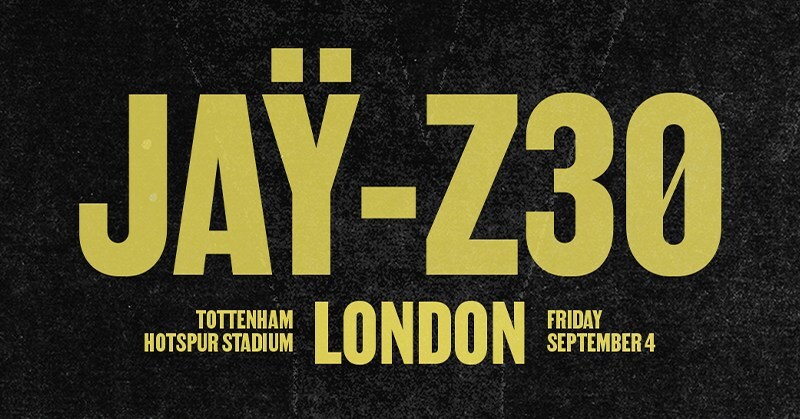
The Tottenham Hotspur Stadium, capable of holding close to 63,000 spectators, is scheduled to host Jay-Z’s performance on September 4th, and 5th. Tickets are selling fast, and fans count their days in fervid anticipation with expectations for a line-up akin to that present at Yankee Stadium. Coincidentally, with Beyonce celebrating her birthday on that exact same date, there is little to no doubt of her presence there.
In 2025, an unauthorised entry occurred within the VIP section of Tottenham Hotspur Stadium amidst Beyoncé’s Cowboy Carter World Tour. Findings from the inquest indicate the arrest of Alirza Dag, 22, and Murat Kodalakoglu, 23, under allegations of intent to commit larceny. Both men were granted bail, with another trial set for February 18, 2030.
Celebrities tend to hire personal security for their events, even though police presence is legally mandated. Factory International’s Press Officer, Anja Samy, had told this the night before Ke$ha’s performance in Manchester this March.
With this factor, it becomes substantially more challenging to seek justice when third parties become involved.
Roc Nation has been approached for comment concerning the safety protocols in place for the upcoming event.
Below, we share an article first published on The Conversation that explains how to stay safe during a crowd crush.

Ten tips for surviving a crowd crush

On July 24, 2010, more than a million dancing partygoers converged on an industrial zone in Duisburg, in Eastern Germany. They were attending the Love Parade, one of the most popular music festivals in the world. Decked out in sunglasses and fluorescent wigs, the happy revellers funnelled into a 200-meter-long tunnel, heading toward a former freight station where part of the festival was taking place.
In the mid-afternoon, heavy congestion formed at the end of the tunnel – the underground passage was too small to allow such an immense crowd to pass. As the minutes went by, the human density rose dangerously. The festivalgoers, pushed up against each other, soon could barely move their arms or even hands. At the core of the crowd, some no longer had enough room to breathe. Around 5 p.m., to the sound of techno beats played by the best DJs in the world, the first victims began to suffocate. In the end, 21 people died, and 651 were injured. One survivor told the newspaper Bild: “It was impossible to get out of the tunnel. There was a wall of people in front of me.”
Just one month earlier, I was defending my doctoral thesis in an amphitheatre at Paul Sabatier University, in Toulouse, France. The topic of my research was the movement of crowds. Over three years, I had examined mass movements in all sorts of places – shopping streets, markets, even in lab experiments. When the Love Parade accident hit the news, my friends and family all asked me the same thing: what should they do if they found themselves in that kind of situation? How could they survive if they were trapped in a crowd, like the victims at the Love Parade? Let’s find out.
Why crowds kill
There has been a steady rise in such crushes since the 1990s. On average, they claim the lives of 380 people every year. The most recent was October 29, 2022, in Seoul, South Korea, when at least 154 people died during Halloween festivities. On April 29 last year, 45 people were crushed to death and more than 150 injured at the Lag B’Omer religious festival in Meron, Israel. It is thought to be the largest peacetime tragedy the country’s history. The deadliest killed 2,300 in Mecca in September 2015.
Three things draw the biggest crowds: religion, sports and festivities – a good summary of human interests. The Mecca pilgrimage, for example, attracts 2 to 3 million faithful every year. The capacity of a football stadium is of course far lower, in the tens of thousands, but public celebrations following key victories can attract hundreds of thousands into city streets. Think of the Champs-Élysées, swarming with people on July 15, 2018, after the triumph of the French team in the World Cup. Last but not least, music festivals draw enormous crowds. The largest on record – 3.5 million people – gathered at Jean-Michel Jarr’s sound and light show in Moscow in September 1997.
In these extreme situations, the smallest organisational lapse can quickly lead to disaster. But what exactly happens in a crowd crush? Surprisingly, the dynamics of this phenomenon were only understood in the wake of a fresh tragedy.
Crowd-quake
In 2006, crowd turbulence caused the deaths of 362 pilgrims in Mecca. This time, the accident was filmed by a CCTV camera and the footage was sent 5,000 kilometres away, to the laboratory of German physicist Dirk Helbing. A researcher specialised in crowd behaviour, Helbing was able to uncover the key to the mystery: the “crowd-quake”, a phenomenon that arises spontaneously when human density reaches a critical threshold of about six people per square meter. At this level of crowding, physical contact between bodies becomes so intense that the slightest movement causes a surge of turbulence through the crowd. Similar to those that occur during earthquakes, these shockwaves cause people to fall and places them all under crushing physical pressure.
Ever since this important discovery, crowd-quakes have been observed during deadly crushes like that at the Love Parade in 2010. Although our understanding of it is increasing, there’s currently no way of stopping this phenomenon once it arises.
Survival guide
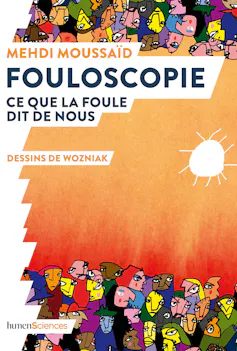
What should you do if you are trapped in a crowd and you start to feel the walls are closing in? Here are a few survival tips from our research in our “Fouloscopie” (crowd studies) labs.
1. Keep your eyes open
Your number-one goal is to get out of the sea of people as quickly and calmly as possible. Look around you: is it better to turn back or go forward? To find out, try to guess where the epicentre of the crush is located – where it is most crowded – and then move toward where the crowd thins out. Don’t forget to look up. You might find a quick escape by climbing a fence or getting up onto a ledge.
2. Leave while you can
If the crowd thickens around you, the available space is reduced and your freedom of movement gradually diminishes. The longer you wait, the harder it will be to escape. Given this, don’t hesitate to leave the highly congested area as soon as you start to feel uncomfortable, and while you still have enough room to move. By getting out of the crowd, you will also reduce the danger for others, since the area will be less crowded for those who stay.
3. Remain upright
If it’s too late to flee, the most important thing to do is retain your balance and stay upright. In a crowd crush, people are pressed so tightly together that if someone falls, they create a domino effect, immediately taking down those around them. Should you fall, the weight of other bodies will pin you to the ground before you have a chance to right yourself. So stay on your feet.
4. Save your breath
Oxygen is your most precious resource. The vast majority of deaths in stampedes are caused by asphyxiation. Avoid screaming unless you have to, and control your breathing.
5. Arms at chest level
Should the pressure become intense, fold your arms up in front of you like a boxer. In that position you can protect your ribcage and keep a few centimetres of space around your ribs and lungs so you can breathe.
6. Go with the flow
When pushed, our natural reflex can be to resist the pressure and push back. In a crowd crush, however, resisting will be a waste of precious energy. Instead, let yourself be carried by the flow while always retaining your balance.
7. Move away from barriers
The only time when the previous tip does not apply is if you’re next to a wall, fence or other solid object you can’t climb up. The first victims of a crush are often pinned against barriers, as was the case in Turin in 2017 and in Heysel and Hillsborough disasters in the 1980s. If possible, move away from any walls, pillars and fences.
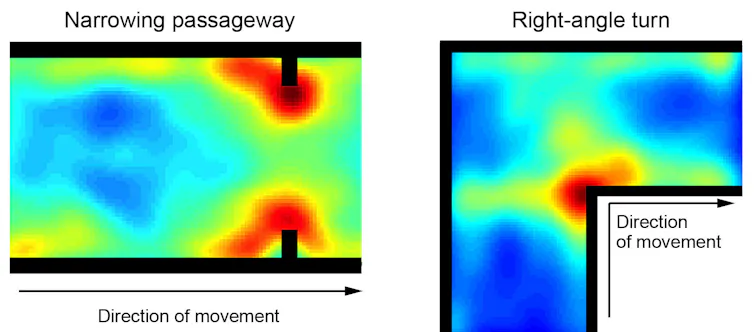
8. Understand the signs of density
To make good decisions, you must be able to evaluate the gravity of the situation. Here are a few rules of thumb for estimating crowd density:
If you have no physical contact with those around you, the density is probably still under three people per square meter, so at present all is well.
if you are bumping against one or two people around you without meaning to, the crowd density must be around four to five people per square meter. There is no immediate danger, but it would be better to move away from the centre of the congestion.
If you can’t freely move your hands, to the point that it is difficult to touch your face, there are too many people – the danger has become acute.
9. In case a panic
A panic is a specific situation in which a crowd rushes in the same direction to escape a real or suspected danger. Examples include the Madhya Pradesh stampede in India (2013), the Place de la République in Paris (2015), the Falls Festival in Victoria, Australia (2016), the Piazza San Carlo in Turin (2017) and the Global Citizen Festival in New York City (2018).
In these kinds of situations, the movement of the crowd can be more dangerous than any threat, real or imagined. Take a moment to evaluate the situation and calmly move to safety, while staying as far as possible from the crowd.
10. Help each other
A dangerous situation for you is just as dangerous for those around you. Research by psychologist John Drury from the University of Sussex demonstrates that altruism and mutual assistance are key to avoiding tragedy. A united crowd is more likely to survive than a crowd of individualists. So remain human and be kind to others, offer help when you can, avoid tripping up those around you and look out for the weakest members of the group. This will benefit everyone, yourself included.
Translated from the French by Alice Heathwood for Fast For Word.
Mehdi Moussaid, Chercheur interdisciplinaire spécialisé dans le comportement des foules, Max Planck Institute for Human Development
This article is republished from The Conversation under a Creative Commons license. Read the original article.