Turnitin is software used by academic institutions to detect plagiarism or AI-generated content in submitted work. With 98% of universities using this software, it has become a staple of university life.
In July of this year, Turnitin was due to introduce a new End-User License Agreement (EULA) allowing it to use our work to develop AI models. This raised significant concerns among students about intellectual property and consent, with many students’ unions across the country working to push back.
When Turnitin made this proposal this summer, students’ unions at several universities, including Reading, Lancaster, St Andrews, and Warwick, pressed their institutions to protect student work.
Cambridge refused to sign the new terms, with Southampton and Newcastle deciding to move away from Turnitin altogether.
In partnership with the sector body Universities and Colleges Information Systems Association (UCISA), this pressure helped push Turnitin to postpone the new EULA on September 29.
It was a rare case of students’ unions and institutions pulling in the same direction. But it was a postponement, not a retreat. The new terms are delayed until September 2027, and Turnitin has said it intends to revisit the changes next year.
Why it matters
Beyond the legalities, there is a question of principle.
AI is being build into ever corner of daily life without anyone being asked. Each Google search now returns an automatic AI overview, all social media platforms now have AI filters available, and you can’t draft an email without being given automated suggestions. With each feature, the technology feels less like a choice and more like a default: the more normal it becomes, the harder it is to object to.
In some contexts, particularly the advancement of science, AI can be remarkably useful. But the generative, mass-produced ‘slop’ that dominates the conversation is a different matter, and research suggests it may be eroding attention spans, critical thinking, and creativity.
What the university says
David Walker, the university’s Pro Vice-Chancellor, replied in an email when asked what University’s stance is on the proposed changes.

“We share the view that protecting students’ and staff intellectual property rights and personal data must be central to these arrangements.” – David Walker
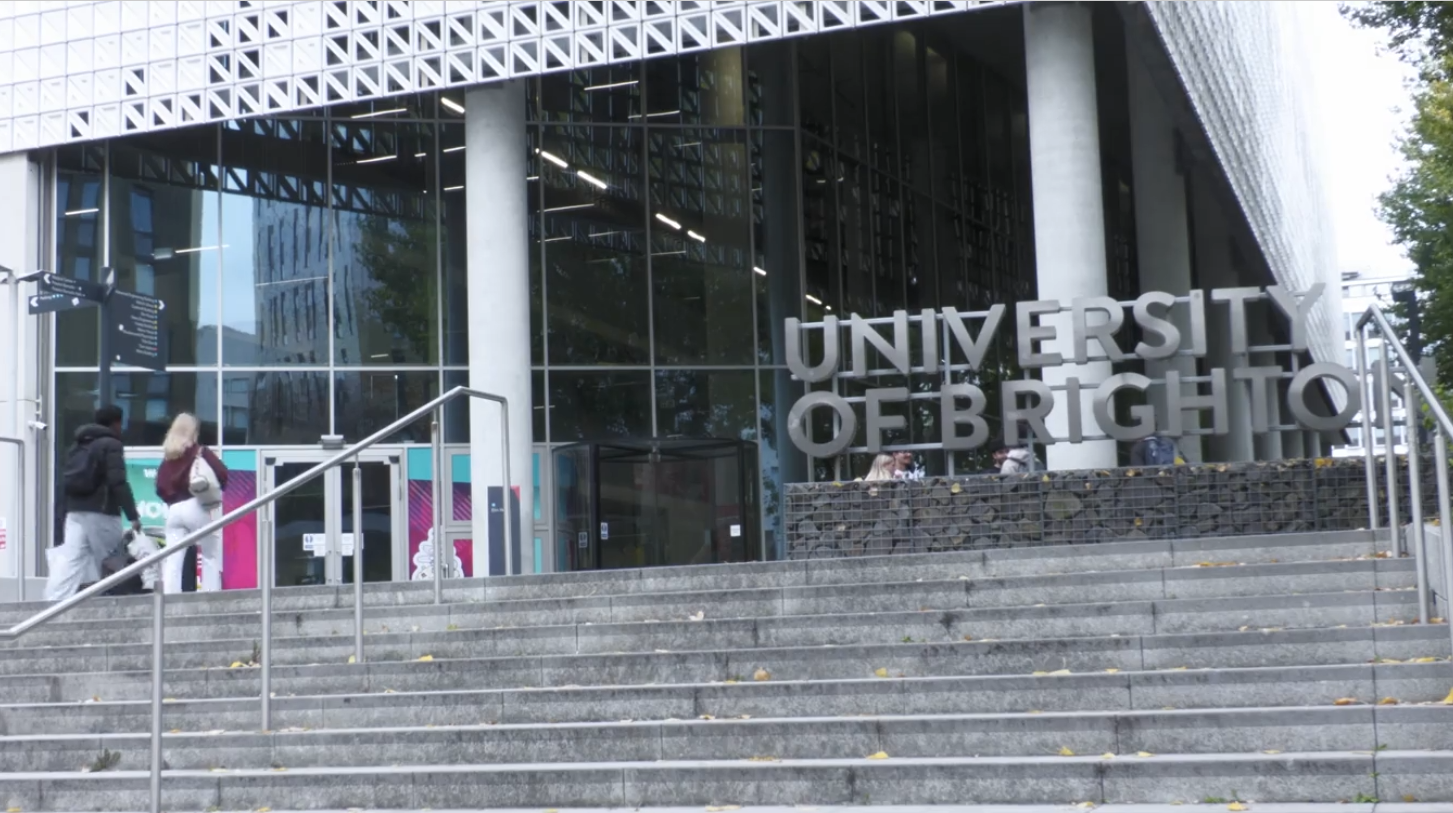
Image courtesy of University of Brighton.
He explains that the university has been “actively involved” in discussions with Turnitin and UCISA.
Alongside other universities, he raises concerns, seeks reassurance about how student and staff submissions will be used, and supports calls for greater transparency. “We share the view,” he wrote, “that protecting students’ and staff intellectual property rights and personal data must be central to these arrangements.”
David shares that Turnitin has confirmed that student and staff submissions have not been used to develop generative AI models or large language models, and that there have been no changes to the university’s current arrangements with the company.
The postponement settles nothing for Brighton, as “it does not mean that the University has agreed to any future changes.”
He also addressed what would happen if the proposal returned. Any future proposals affecting how student work or data is used “would be carefully considered,” and the university “would challenge arrangements that did not adequately safeguard our students and staff.”
Private diplomacy, public accountability
Walker pointed out that the university had communicated with students about the issue via MyBrighton, its internal student portal. However, a message on a login-protected platform is not a public statement, and it was invisible to some freshers, since it was sent out before the term started, as it would be to other prospective students, the wider city, or anyone outside the university.
Elsewhere, the stance has been more public.
For instance, the Student Union officer at the University of York has spoken very openly, explaining how “you should own [your] work”.
What happens next
Turnitin has said it will return to these changes next year, and it has committed, according to the university, to working with UCISA and institutions on the concerns raised.