If you walk through any student corridor late at night, you’ll be much more likely to hear a deep 808 seeping out from behind a bedroom door than anything that resembles a proper conversation. It has become a generation making music in the same space that they sleep in and converting tiny bedrooms into mini studios full of dodgy monitors, LEDs, and laptops that hang together through sheer force of will alone. This is the new musical era, and whether it is a good thing is a matter of whose perspective you take.
Personally, I think it’s fine, the accessibility is brilliant. You don’t need a record company advance anymore or a £500 a day studio to make something worth listening to. Anyone can get into the business now, and that’s why I think we should be a bit worried too, because when everyone can make music, everyone will. And not everyone should.
Before we get into the current issue, however, it is important to remember that the Bedroom Revolution didn’t begin with the TikTok kids and their pirated FL Studio setup. Some of the most iconic artists of the last four decades have been brewing up a storm well before laptops became the recording studios of choice.
Consider the case of Liam Howlett. Before The Prodigy was the firestarter of popular culture, Howlett was a kid in his bedroom piecing together tracks with the skill of a surgeon working on a patient. It was a process involving nothing but samplers and record shop diving, and instinct.
Then came RZA, who constructed the entire 90s out of a Staten Island apartment that most likely stunk of weed and busted wires. The entire Wu-Tang universe was made possible through machines that sounded like they’re having an aneurysm in the middle of the recording process. But the flaws, the hiss, the crackle, and the human touch, are the life and soul that simply cannot be replicated.
Even rock icons weren’t immune to it. Springsteen recorded the album Nebraska on a Portastudio in his home because the official studio recording made the song lifeless. The low-budget home recording was the only honest, eerie, and real way to capture the song’s essence. Just another example of how the tools will always be less important than the artist wielding them.
And that’s where my annoyance with today’s bedroom production starts. The trailblazers did it out of necessity. It was a vision, a need to stretch the limits with what they had at their disposal. But nowadays? Half the “producers” out there learned everything they know from a ten-minute YouTube video with the title “How to Make a UK Drill Beat FAST!!!”
The wave of accessibility is excellent until it’s not.
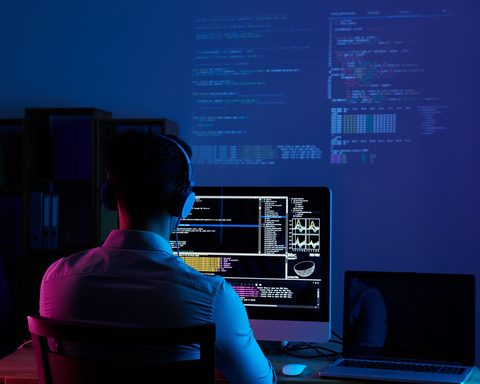
At a certain point, it’s hard to deny and ask yourself, if everyone has the capability to make music, is talent even a factor anymore? Does the fact that I own a DAW (digital audio workstation) mean I’m a musician in the way I’m an athlete because I own a gym membership? I don’t think so. Others, however, have resisted the digital temptation, turning things around and running away from DAWs, towards the machines in the physical sense again.
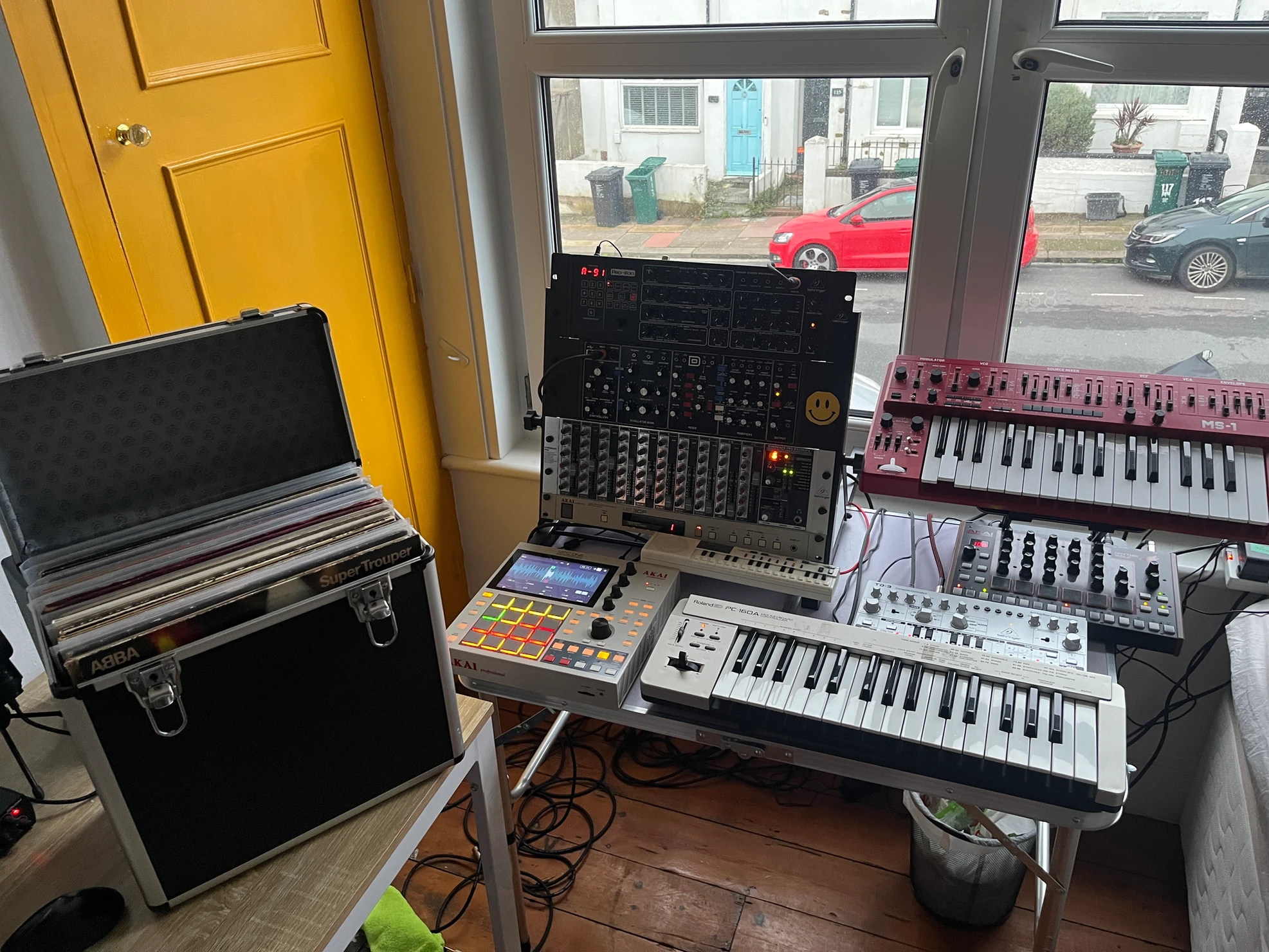
I spoke to Roberto Coles to experience it firsthand, a Brighton-based bedroom musician with a breakbeat heavy electronic sound and a completely computer-free production process. No mouse clicks, no plugins. Just a groove box, some analogue synths, and drum machines rumbling along like they’re plotting anarchy.
His bedroom appears less like a digital workspace and more like a miniature spaceship. Gear everywhere. Cables stuck together like vines, lights blinking in sequences that only he gets. It is a messy and chaotic environment that is, in a way, a relief, a workshop where it appears that all instruments are alive.
When I asked why he doesn’t use computers or DAWs when they’re more convenient, he simply shrugged as if the answer to the question was obvious and didn’t need a second thought.
“I don’t think DAWs or anything is cheating,” he said, casually adjusting a synth that was growling in the corner.
“But working with real analogue synthesizers has improved my workflow. I can do anything I want, and I’m not limited to the computer, and it sounds great,” he added.
And he’s right. Seeing him perform, the difference is clear. Each turn of a knob changes the song’s dynamics. Each drum beat has purpose, not forced into place. The flaws make his beats unique in a way most laptop artists struggle to recreate with hours of tweaking ‘analogue warmth’ tools.
The strange thing is the dichotomy of today’s music production: it’s an easier time than ever to produce and release music, and that means the difficult way has now become ‘cool’.
Regardless, the fact is that most people aren’t fully analogue. Most people are slumped in front of their laptops, pulling presets into their beats as if they’re playing The Sims. And that’s fine until the point where everyone calls themselves a producer based on some YouTube tutorial video.
We live in the most flexible period in the history of music production, and it’s both an incredible and a worrying thing. Anyone can produce something amazing in their bedroom, and anyone can make something terrible too. And you don’t need much talent to upload either.
Whether you’re Springsteen with a Portastudio, RZA stacking samples into a box, or Liam Howlett assembling a rave from nothing, the fact remains. The room doesn’t make the music, nor does the equipment. The person does. And in bedrooms across the world, for better and worse, that person is now everyone.
Edited by Yan Sorochynskyi