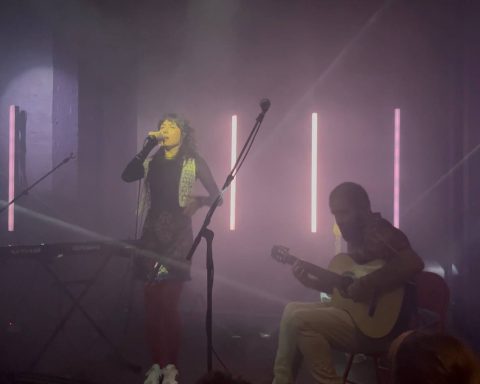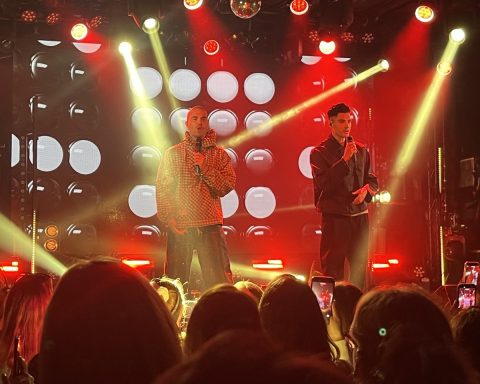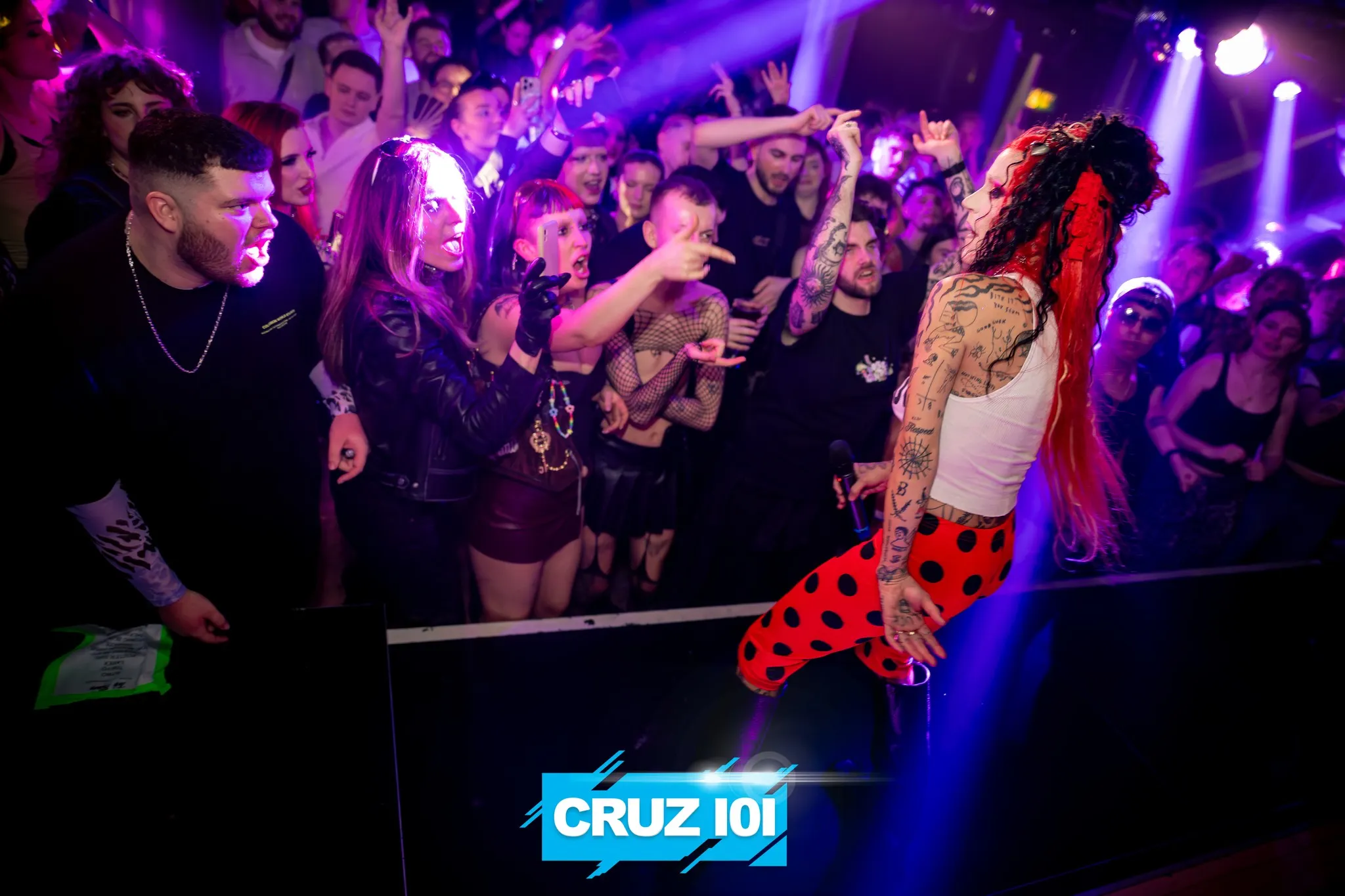

International recognition within the LGBTQ+ community is a rare achievement for an independent artist. For Brooke Candy, winning over these audiences is not an act of performative allyship but an ongoing mission to foster awareness and affirmation within hip‑hop culture. Crowds shouting lyrics in unison on the floor of a gay nightclub, while devoted fans push toward the stage, create an underground spectacle no digital camera could ever truly capture.
On stage, the bad‑ass persona that redefines female allure softens into something more intimate. While major artists introduce themselves in stadiums, Brooke Candy’s entrance is marked by the sudden hush that falls as POGO from her Spiral album begins to play. The silence lasts barely a second before erupting into ovations.
From the outset, the audience is captivated by the make‑up artistry. Vibrant red, orange and purple eyeshadows form a fiery gradient that mirrors the raw energy of ghetto‑house. Glitter, applied with abandon, catches the basement‑club lights and amplifies her candour. Each brushstroke complements the voluminous red‑and‑black curls that evoke cabaret aesthetics reframed through rap.
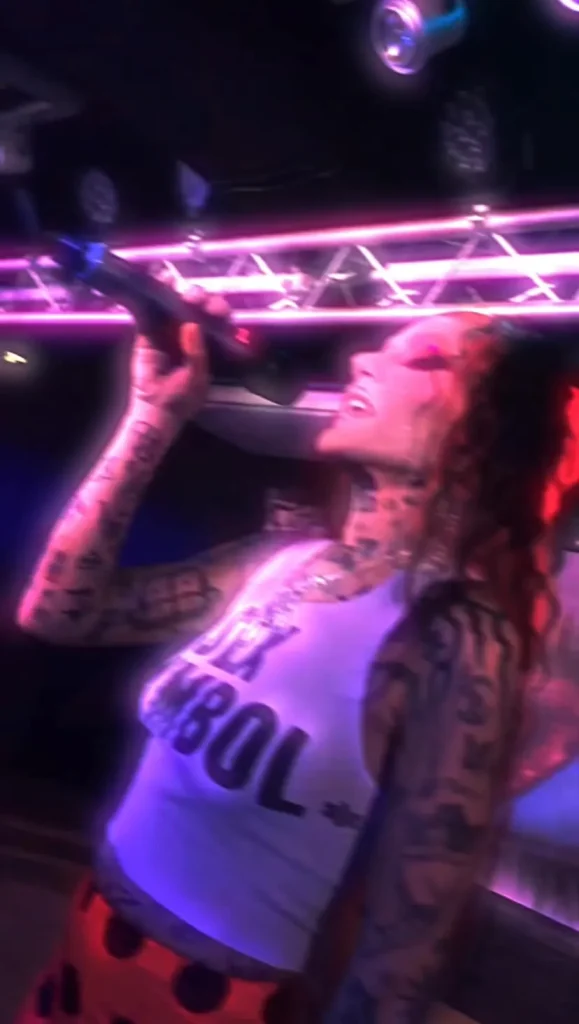
Her white cropped tank top, boldly printed with “Sex Symbol,” reads as satire — an embrace of ageing with confidence rather than shame.
Debates around ageing and desirability have long shaped pop culture, including LGBTQ+ spaces. On Grindr, youth and fitness dominate visibility. At a Candyland tour, these hierarchies dissolve.
A 30‑year‑old man in the front row performs with theatrical zeal. Men in their 40s raise drinks in celebration. Women in their 20s and 30s sway to Safe Word. Together, they channel a collective desire to amplify agitprop‑style freedom through Brooke’s untamed rhythms.
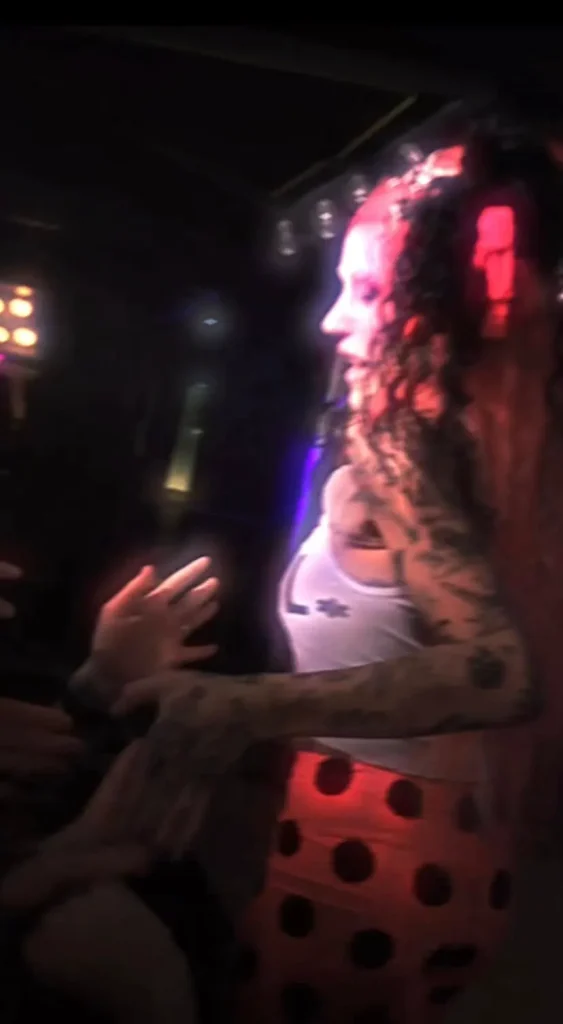
A performance is never defined by the stage alone. The crowd shapes the atmosphere, the direction, the emotional temperature. A fan’s emotional outburst becomes part of the show’s memory. What stands out most is Brooke’s response to the tears of joy streaming down some faces.
Emry Roberts, from Manchester, has followed Brooke Candy since he was 13. Her 2013 debut video Das Me changed his life.
“The video for Das Me really made me feel comfortable being myself, and when I was at my lowest point she released Happy Days, and that helped me so much.” – Emry
Experiencing all of this inside a nightclub feels intimate, almost exclusive — evoking the spirit of Studio 54 rather than the corporate arenas favoured by major labels. Throughout the two‑hour show, humility fills the room.